Choosing Session Intensity
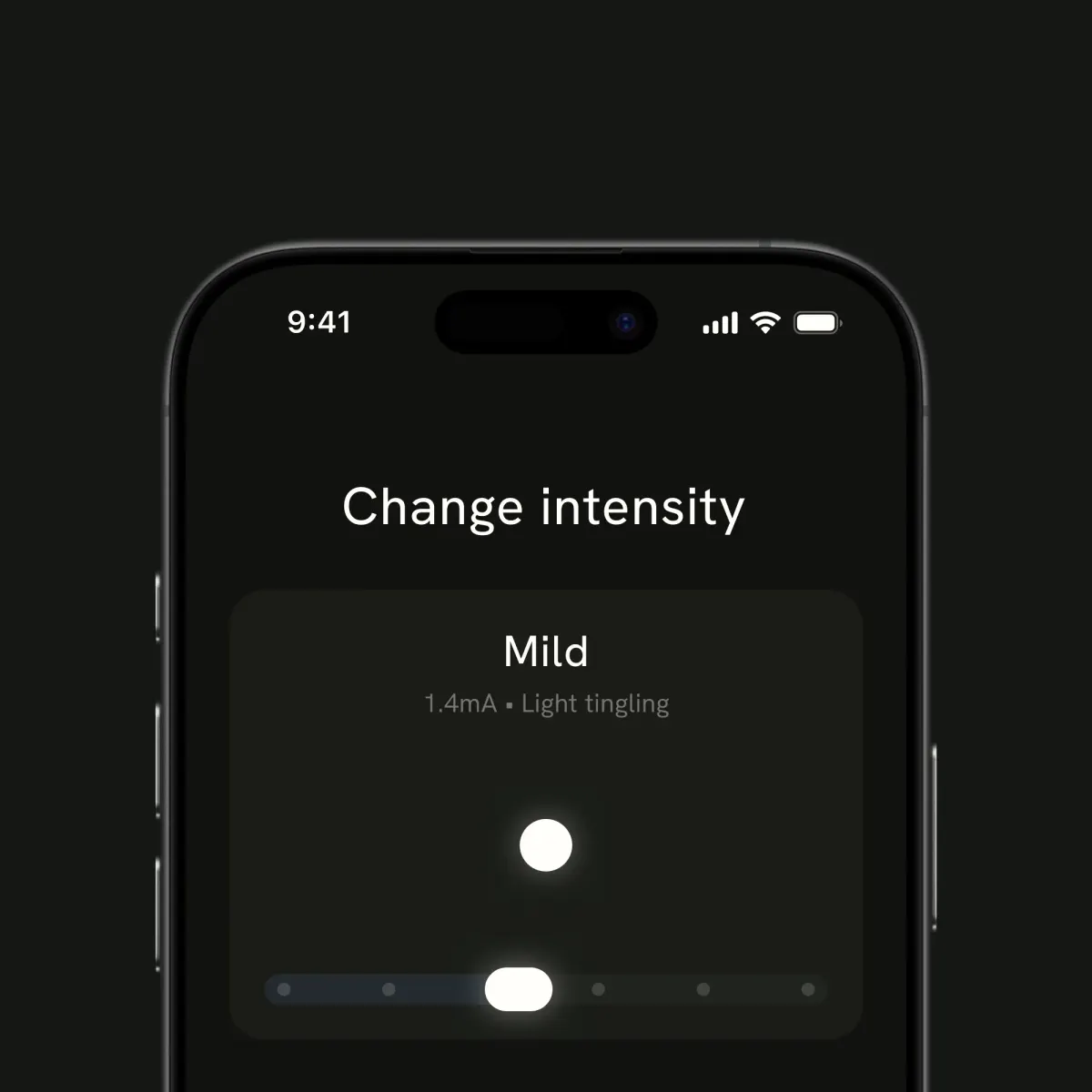
When starting with a device like Mave, few common questions we hear are: Am I doing this right? Is the setting too high? Is it too low? Because the session involves a physical sensation, often a mild tingling or warmth, it is natural to wonder what the setting is right for you.
If you're looking for the short answer:
- There is a widely accepted, scientifically sound intensity range (1 mA to 2 mA).
- You should aim for the highest intensity within that range that still feels comfortable.
- Ultimately, the right intensity for you today entirely depends on your personal comfort.
But if you’re the kind of person who wants to understand the mechanics and become an expert on your own routine, read along for a more detailed breakdown.
The Same Setting Feels Different to Everyone
Everybody is a little different. The thickness of your skull, the natural conductivity of your skin, and your personal sensory thresholds all dictate the sensation. An intensity that is barely perceivable to one person might feel slightly prickly to another.
Because of this, the right intensity boils down to whatever you are most comfortable with. Your session should never be painful or highly distracting. If you find yourself gritting your teeth or unable to focus on a book because of the sensation, the intensity is too high. Your goal is to find a level that you can comfortably sustain for your full 20-minute session.
When In Doubt, Lean Higher
While comfort is your baseline, if you're choosing between two settings that both feel fine, the higher intensity is generally better.
Here's why, in plain terms. When a session is running, the device creates an electrical field that travels through the outer layers of your brain.
When you increase the intensity, this electrical field becomes larger and more robust. This is beneficial for one reason: it smooths out human error. We are not perfectly symmetrical, and you likely won't place the headset in the exact same millimeter-perfect position every single day. A stronger field is more generous about that. Even if today's placement is slightly off from yesterday's, the wider field still reaches the networks in your Prefrontal Cortex you're aiming for.
Finding Your Sweet Spot
As you settle in, here’s how we went about approaching our intensity settings:
- Start gently. If tDCS is new to you, begin on a lower intensity (1.2mA) and give your skin and nerves a few minutes to get used to the feeling.
- Nudge it up as you go. Over your first few sessions, you will likely notice that the tingling sensation fades into the background faster. As you get used to it, try bumping the intensity up.
- Don't force it. If it feels uncomfortable, just ease it back down. A comfortable session you'll happily return to tomorrow beats a stronger one that makes you dread putting the headset on.
Your brain is remarkably adaptable. Trust your physical comfort, don't be afraid to experiment a little higher as you get used to it, and let the device do the rest!