The Heart Won't Lie (about stress)
We all experience stress, which is globally on the rise. For years, measuring stress relied on subjective self-reports. Researchers have long sought an objective measure, and Heart Rate Variability (HRV) has emerged as a promising indicator, reflecting how your nervous system regulates the body.
What is Heart Rate Variability (HRV)?
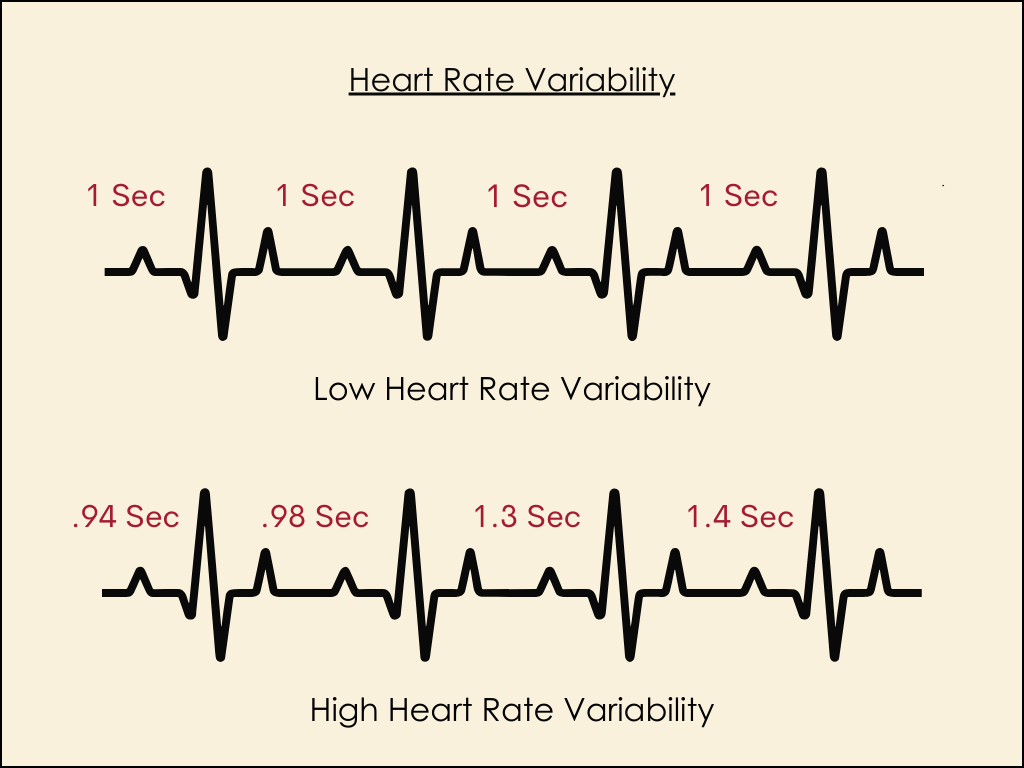
HRV is the tiny variations in the time between heartbeats, not the heart rate itself. Two people can have the same heart rate, but the variation in timing between beats reflects different levels of stress regulation.
Why HRV Signals Stress
HRV is an indicator of the body’s stress level: Low HRV means more stressed, and high HRV means less stressed. This can seem counter-intuitive compared to heart rate (low is generally good, high is bad).
HRV measures the uniformity of our heartbeats. Flexibility in bodily systems, like the heart, is theorized to contribute to adaptability. However, under stress (physical or mental), the body shifts into "Fight or Flight" mode. Efficiency becomes the priority, making the heart beat more uniformly.
The more uniform the heartbeat, the lower the variance -hence, low HRV indicates the body is under stress.
The Brain's Role in Stress
Stress has an evolutionary role, triggering the amygdala's "fight or flight" response when facing danger. Unfortunately, the constant pressures of modern life - deadlines, financial worries, and information overload - keep this system constantly triggered.
Crucially, the Prefrontal Cortex (PFC), the part of our brain responsible for complex cognition, provides rational reasoning to the amygdala and regulates the fear response. It allows us to manage emotions and make complex decisions.
When the PFC is fatigued, the amygdala's alarms go unregulated, judging non-harmful messages as dangerous. This keeps the nervous system activated in "go mode."
Where tDCS Comes In
tDCS (transcranial Direct Current Stimulation) is being studied as a way to gently modulate the brain networks involved in regulation. By applying gentle electric stimulation, the goal is to strengthen the PFC's neuronal networks responsible for regulating the stress response.
Studies suggest that tDCS can lead to higher HRV, on average, compared to a placebo. Simply put, after tDCS sessions, participants' bodies looked more like they were in a "rest and digest" state rather than stuck in "go mode." This suggests tDCS may help lower heart rate and improve HRV during psychological stress and athletic performance by reducing overwhelming thoughts and feelings. It may also help with faster recovery after exercise.
While tDCS is known to modulate activity in control networks like the PFC, research is still clarifying how reliably this translates into changes in HRV across different people and contexts. HRV is a useful, yet "noisy," marker, influenced by many factors (sleep, caffeine, time of day, etc.). Isolating the tDCS effect requires careful study. However, current evidence suggests tDCS can nudge HRV in a recovery-friendly direction. If these results are confirmed in larger studies, it could offer a measurable way to help the nervous system shift back into flexibility.
Where the Mave Headset Fits
The Mave headset is designed to work with the brain's natural systems, helping them function more reliably as demands increase. It's not about forcing focus or a quick boost. Instead, it aims to make modern cognitive demands feel more manageable over time by supporting the underlying capacity for attention and working memory. The goal is to build a steadier baseline, so everyday stress takes less out of you.